

The Holy Father compared modern sentiments in the country towards the Church to those of the 1930s, when Republican anti-clericalists murdered priests and burned churches during the Spanish Civil War. This of a nation which, just 35 years ago, was under a fascist regime very close to the Catholic Church and which is still considered by many foreigners as being one of the most religious in Europe.
So how ‘anti-clerical’ really is Spain?
It became the first European nation to legalise same-sex marriage when the Cortes Generales, the country’s parliament, passed a law in June 2005. Furthermore, just this year, abortion became fully legal in the country, having only been available in restricted form since 1985. For a land still considered by outsiders as being very Catholic, these measures send out the opposite message.
However, in a 2005 poll, 59 per cent of Spaniards still said that “they believe there is a God” and traditional religious festivals are as popular as ever, with ayuntamientos (town halls) investing huge sums of money in to their local annual fiestas. Small Spanish towns are still built around their magnificent churches and, unlike in the U.K., towns are completely closed on a Sunday. Even the country’s biggest and richest supermarkets are not permitted to open on the day of rest.
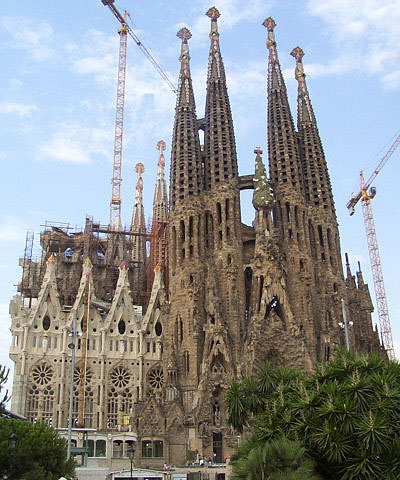
But it is true that there is an underlying resentment towards the Catholic Church in Spain. The day after the Pope consecrated Barcelona’s unfinished church, Antoni Gaudi’s Sagrada Familia, I was surprised to read in the opinion pages of local Aragonese newspapers very similar sentiments to those expressed by many during the Pope’s visit to the U.K. in September.
Spaniards were asking the same questions as many Brits. ‘Why should the taxpayer fund the Vatican’s trip?’ ‘What has the Pope got to do with my life?’ And they too were concerned about Ratzinger’s handling of the child abuse scandal.
In the town where I work in Aragon, the local Church struggles so much to attract parishioners that the priest has been known to pay Romanian boys one euro each to help him out with Sunday mass. From what I can see, the Church has failed to cease the opportunity to attract young people to its pews by offering much needed activities in an otherwise boring area. But the Church has refused to do so.
It is very common in Spain for young people to move to the big cities when they reach 18, leaving their towns of birth and church congregations full of grey hair and walking sticks. The common feelings I sense from young Spaniards is that Church is for old people and a thing of the past - similar to their opinions on bullfighting. Interestingly, many are the children of a generation born under Franco, Spain’s fascist dictator who reinvigorated the influence of the Church in Spain after taking power in 1939. Their parents grew up in a new democracy that had escaped the grasp of the Catholic Church. Will this latest generation even baptize their children in the future?
Spain is now a multi-cultural and multi-faith nation (the first Mosque to be built in Granada for more than 500 years opened its doors in 2003). Only time will tell if the Church finds a way to reengage with the young generations in order to survive. For if it doesn’t, the only remnants of a colourful history of the Catholic Church in Spain could be those stunning places of worship that tower above every town, serving as a reminder of the role the Catholicism once played in the lives of their inhabitants.
PHOTOS:
Benedict XVI in 2006. Papa
Barcelona's unfinished church, la Sagrada Familia. Montrealais


No comments:
Post a Comment